• Skip to primary navigation
  • Skip to main content
  • Skip to primary sidebar
Opiate Addiction Support

Opiate Addiction Support

Holistic Strategies for Ending Opiate Dependence

  • START HERE
  • FOR PHYSICIANS →
  • COURSE
  • GUIDES
  • PODCAST
  • SUPPLEMENTS
    • Elimidrol® (Comfort Support)
    • SomaDerm® (Hormonal Support)
    • SomaNight® (Sleep Support)
    • NeuraVie® (Mood Support)
  • ABOUT
    • Founder Story
    • Contact
  • [ WORK WITH MATT ]
    • Book a Discovery Call
  • Show Search
Hide Search
Home/Opiate Addiction/The 4 Hidden Predictors of Opioid Addiction (Most People Miss #1): Why Your Brain Might Be Wired to Get Hooked Faster

The 4 Hidden Predictors of Opioid Addiction (Most People Miss #1): Why Your Brain Might Be Wired to Get Hooked Faster

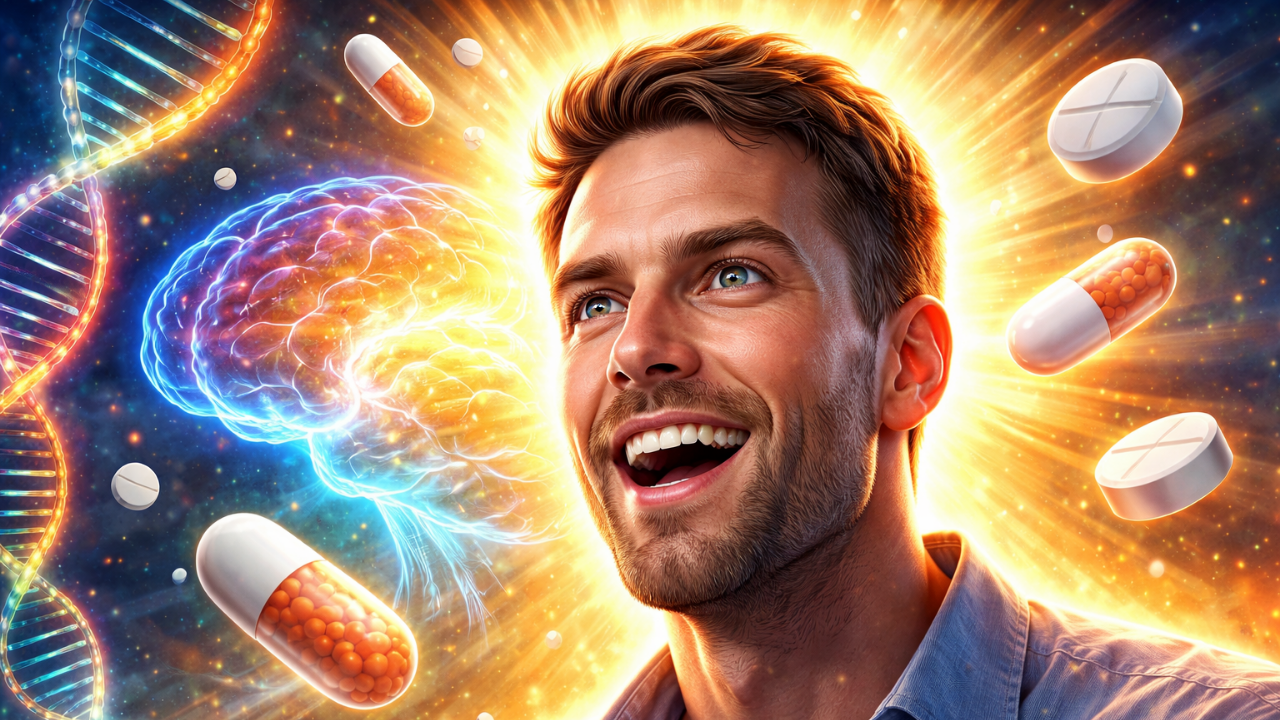
Illustration of a man experiencing opioid-induced euphoria with a glowing brain, floating pills, and DNA strands representing genetic and biochemical risk factors for opioid addiction

How genetics, metabolism, tolerance, and pain sensitivity create a “perfect storm” for rapid opioid dependence.

Some people take opioids and feel:

  • 😴 sleepy
  • 😐 neutral
  • 🤢 uncomfortable

And then there are people who take the exact same substance… and feel something completely different:

  • ⚡ energized
  • 💎 confident
  • 🔥 alive

For them, it’s not sedation.

It’s transformation.

It feels like stepping into a version of themselves that is more capable, more resilient, more focused, more alive.

And that difference?

That difference is everything.

Because opioid addiction is not random.

It is not evenly distributed.

It is not simply about exposure.

👉 It is often predictable—based on how your brain and body respond to the drug.

In this article, you’re going to learn the four most powerful predictors of opioid addiction risk—and why at least three of them are deeply rooted in your biology.

If you’ve ever wondered…

  • “Why did this hit me so hard?”
  • “Why did it work so well for me?”
  • “Why couldn’t I just take it or leave it like others?”

…this may be one of the most important things you ever read.

Cinematic split image showing two different opioid experiences, one side fatigued and disconnected in dark tones, the other energized and confident with glowing neural energy, representing biological differences in addiction response

Table of Contents

  • 1
  • 2 🧬 Addiction Through the Lens of Biology
  • 3
  • 4 ⚡ Predictor #1: Opioids Give You ENERGY (The Hypomania Effect)
    • 4.1 ⚡ When Opioids Don’t Sedate—They Activate
    • 4.2 🧠 What Is Hypomania?
    • 4.3 🔥 Why This Becomes So Addictive
    • 4.4 The Hypomania Trap
    • 4.5 🧪 What’s Happening Biochemically
    • 4.6 👤 Who Is Most Prone to This?
      • 4.6.1 💡 The Dangerous Truth
  • 5
  • 6 ⏱️ Predictor #2: Opioids Wear Off Faster Than Normal (Fast Metabolism)
    • 6.1 ⏳ What This Feels Like
    • 6.2 🔁 Why This Increases Addiction Risk
    • 6.3 🧪 What Causes This
    • 6.4 🧠 The Psychological Impact
    • 6.5 💡 Key Insight
  • 7
  • 8 💪 Predictor #3: Naturally High Opioid Tolerance
    • 8.1 ⚖️ What This Looks Like
    • 8.2 🚨 Why This Is Risky
    • 8.3 🧪 Possible Mechanisms
      • 8.3.1 💡 Key Line
  • 9
  • 10 🧠💔 Predictor #4: Chronic Pain, Stress, or Emotional Dysregulation
    • 10.1 🧩 The Triple Relief Effect
    • 10.2 🔥 Why This Hooks People Fast
    • 10.3 👤 High-Risk Profiles
      • 10.3.1 🧠 Strategic Recovery Framing
      • 10.3.2 💡 Key Insight
  • 11
  • 12 🌪️ The Perfect Storm: When Predictors Stack
    • 12.1 ⚡ Example Stack:
    • 12.2 🚀 What Happens Next
      • 12.2.1 💡 Key Line
  • 13 🔁 Why These Predictors Accelerate Addiction
      • 13.0.1 🔥 The Core Principle
  • 14
  • 15 🧠 Reframing Addiction: Remove Shame, Add Precision
    • 15.1 💡 Power Reframe
    • 15.2 🛠️ What This Means for Recovery
    • 15.3 🔄 Shift the Strategy
    • 15.4 🧠 Key Recovery Targets
      • 15.4.1 🌱 Build Instead of Fight
      • 15.4.2 💡 Bridge Insight
  • 16
  • 17 💡 Final Takeaway
    • 17.1 🧠 Closing Line

🧬 Addiction Through the Lens of Biology

Most people are taught to think about addiction in terms of behavior:

  • discipline
  • choices
  • environment
  • exposure

And while those factors absolutely matter…

They don’t tell the full story.

Because two people can take the same opioid, at the same dose, in the same environment…

…and have completely different experiences.

Why?

👉 Biochemical individuality.

Each person has a unique:

  • neurotransmitter baseline
  • receptor sensitivity
  • enzyme activity
  • nervous system profile
  • genetic expression

This means the effect of a drug is not universal.

It is personalized by your biology.

As Dr. Gabor Maté has said:

Addiction is not about the drug, but about the relationship between the person and the drug.

And that relationship is largely shaped by how your brain responds.

So instead of asking:

“Why couldn’t I control myself?”

A more useful question is:

“What did this substance do for me that made it so hard to let go?”

Let’s break that down.
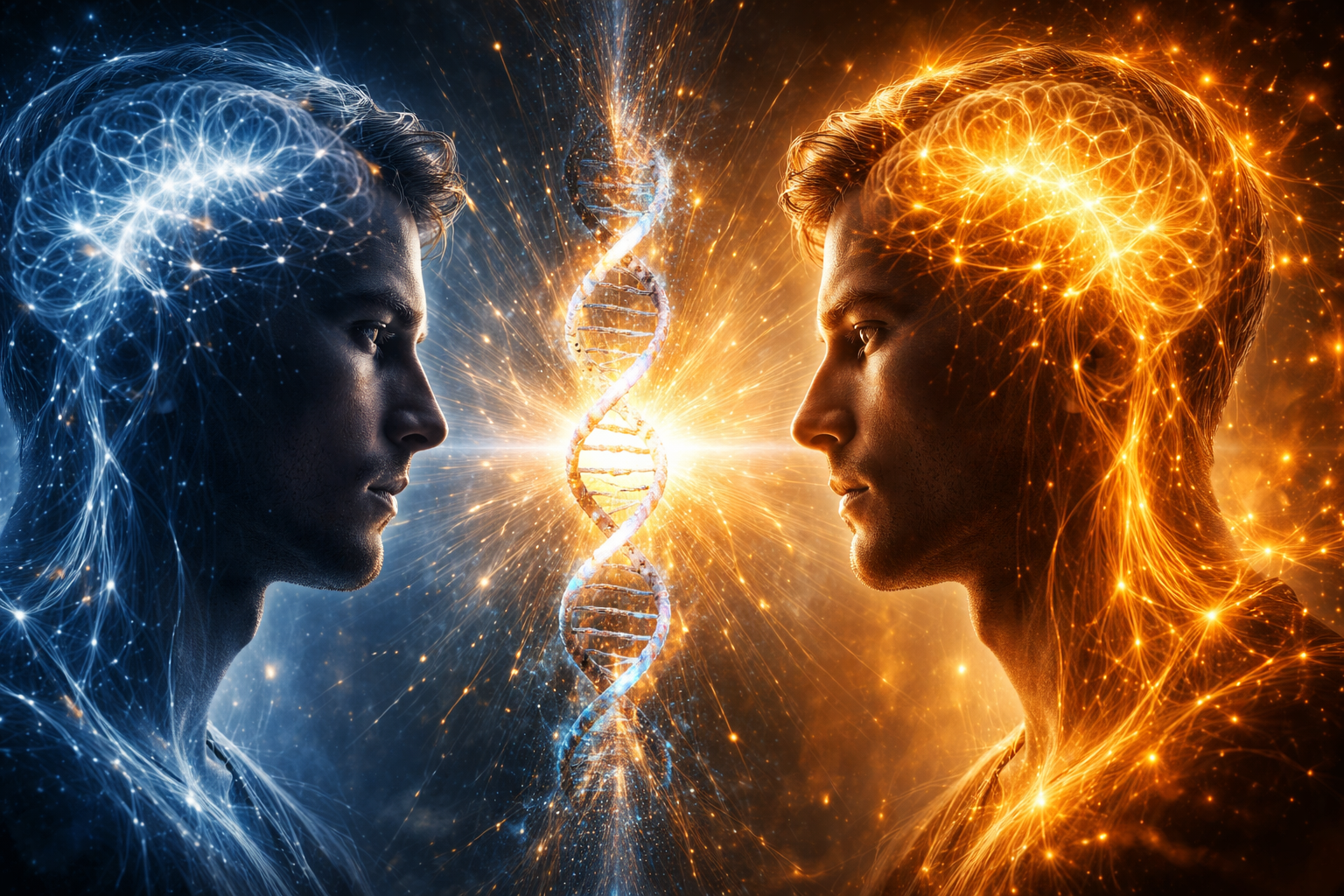
Cinematic image of two human profiles facing each other with glowing neural networks and a DNA strand between them, representing biochemical individuality and how biology influences addiction risk and response

⚡ Predictor #1: Opioids Give You ENERGY (The Hypomania Effect)

This is the one most people miss.

Because opioids are classified as depressants.

They are supposed to make you:

  • relaxed
  • calm
  • sleepy

But for a subset of people…

They do the exact opposite.

⚡ When Opioids Don’t Sedate—They Activate

For certain individuals, opioids produce a paradoxical effect:

  • ⚡ increased energy
  • 💎 elevated confidence
  • 🧠 sharper thinking
  • 🎯 improved motivation
  • 😌 calm and drive at the same time

Instead of feeling slowed down…

They feel switched on.

🧠 What Is Hypomania?

Hypomania is a mild form of mania characterized by:

  • elevated mood
  • increased energy
  • reduced need for sleep
  • heightened confidence
  • increased productivity

It’s not full-blown mania.

It’s more subtle.

But it can feel incredible.

Now here’s the key insight:

👉 Opioids can chemically induce a hypomanic-like state in certain individuals.

🔥 Why This Becomes So Addictive

Most addictions are framed as escape.

But this is different.

This is not about escaping life.

This is about enhancing it.

When opioids trigger this state, people often report:

  • “I feel like myself… but better.”
  • “Everything flows.”
  • “I can finally handle my life.”
  • “This is who I’m supposed to be.”

This is what I call:

The Hypomania Trap

Because the drug doesn’t just relieve pain…

It creates a version of you that feels:

  • more capable
  • more confident
  • more alive

And that is incredibly reinforcing.

🧪 What’s Happening Biochemically

Several mechanisms contribute to this effect:

  • Dopamine increase → motivation, reward, drive
  • Endorphin activation → pain relief, euphoria
  • Stress reduction → less cortisol, less anxiety
  • Pain removal → energy previously used for coping is freed

👉 When pain (physical or emotional) is removed…

Energy becomes available.

And that energy can feel like stimulation.

👤 Who Is Most Prone to This?

This pattern often shows up in people who are:

  • highly driven or high-functioning
  • dealing with chronic stress or overwhelm
  • emotionally sensitive (HSP/empath types)
  • struggling with ADHD-like symptoms
  • carrying heavy responsibility (parents, entrepreneurs, caregivers)

For these individuals, opioids don’t sedate.

They optimize.

💡 The Dangerous Truth

This isn’t sedation—it’s optimization.
And that’s what makes it dangerous.

Because when a drug feels like it makes your life better…

…it becomes very hard to let go.

Cinematic image showing a man transitioning from exhaustion and stress to energized confidence with glowing neural and body energy, illustrating the hypomania effect of opioids in certain individuals

⏱️ Predictor #2: Opioids Wear Off Faster Than Normal (Fast Metabolism)

The second major predictor is less obvious—but just as powerful.

Some people metabolize opioids much faster than average.

⏳ What This Feels Like

  • The effects don’t last long
  • Pain returns quickly
  • Relief fades sooner than expected
  • Cravings come back faster

Instead of a long, steady effect…

You get a short burst followed by a drop.

🔁 Why This Increases Addiction Risk

If something works—but doesn’t last…

You naturally want to repeat it.

This creates:

  • more frequent dosing
  • tighter use cycles
  • stronger reinforcement loops

🧪 What Causes This

This is often driven by:

  • liver enzyme differences (CYP450 variations)
  • faster drug clearance
  • reduced duration of receptor binding

In simple terms:

👉 Your body processes the drug quickly—so the effect disappears quickly.

🧠 The Psychological Impact

This pattern creates a very specific internal dialogue:

  • “It worked… but not long enough.”
  • “I just need a little more.”
  • “I need to take it again already?”

This leads to:

  • urgency
  • chasing behavior
  • increased frequency

💡 Key Insight

The shorter the relief… the tighter the cycle. And tighter cycles create stronger addictions.

Cinematic image of a woman holding a pill bottle and staring at a glowing hourglass, symbolizing fast opioid metabolism and short-lived effects leading to repeated use and addiction cycles

💪 Predictor #3: Naturally High Opioid Tolerance

The third predictor is something many people don’t even realize they have.

Some individuals have a naturally higher tolerance to opioids from day one.

⚖️ What This Looks Like

  • First use feels “manageable” instead of overwhelming
  • Less nausea, dizziness, or sedation
  • Ability to take higher doses early
  • No strong negative feedback

While others feel:

  • sick
  • disoriented
  • overly sedated

You might feel:

  • normal… or even enhanced

🚨 Why This Is Risky

Most people are protected by what we can call a “biological brake system”:

  • unpleasant side effects
  • sedation
  • discomfort

These signals help limit use.

But if you don’t experience those…

👉 There’s nothing slowing you down.

🧪 Possible Mechanisms

  • differences in mu-opioid receptor sensitivity
  • endorphin system variations
  • genetic differences in receptor density

💡 Key Line

For some people, the warning signs never show up. And without warning signs, escalation happens faster.

Cinematic image of a woman calmly holding opioid pills with no visible distress, representing naturally high opioid tolerance and lack of early warning side effects that increase addiction risk

🧠💔 Predictor #4: Chronic Pain, Stress, or Emotional Dysregulation

This is one of the most powerful—and most common—predictors.

Because opioids don’t just relieve physical pain.

They relieve multiple types of pain at once.

🧩 The Triple Relief Effect

Opioids can simultaneously reduce:

  1. 💢 Physical pain
  2. 💔 Emotional pain
  3. 😰 Stress and anxiety

That’s not a single benefit.

That’s a multi-dimensional solution.

🔥 Why This Hooks People Fast

If a substance:

  • reduces your pain
  • calms your nervous system
  • helps you function
  • makes life feel manageable

…it doesn’t feel like a drug.

It feels like a solution.

👤 High-Risk Profiles

This predictor is especially strong in people with:

  • trauma history
  • chronic stress
  • burnout
  • anxiety disorders
  • depression
  • emotional sensitivity
  • nervous system dysregulation

🧠 Strategic Recovery Framing

Opioids function as a:

multi-domain relief molecule.

They impact:

  • biochemical systems
  • emotional regulation
  • nervous system state

💡 Key Insight

The more problems something solves, the harder it is to give up.
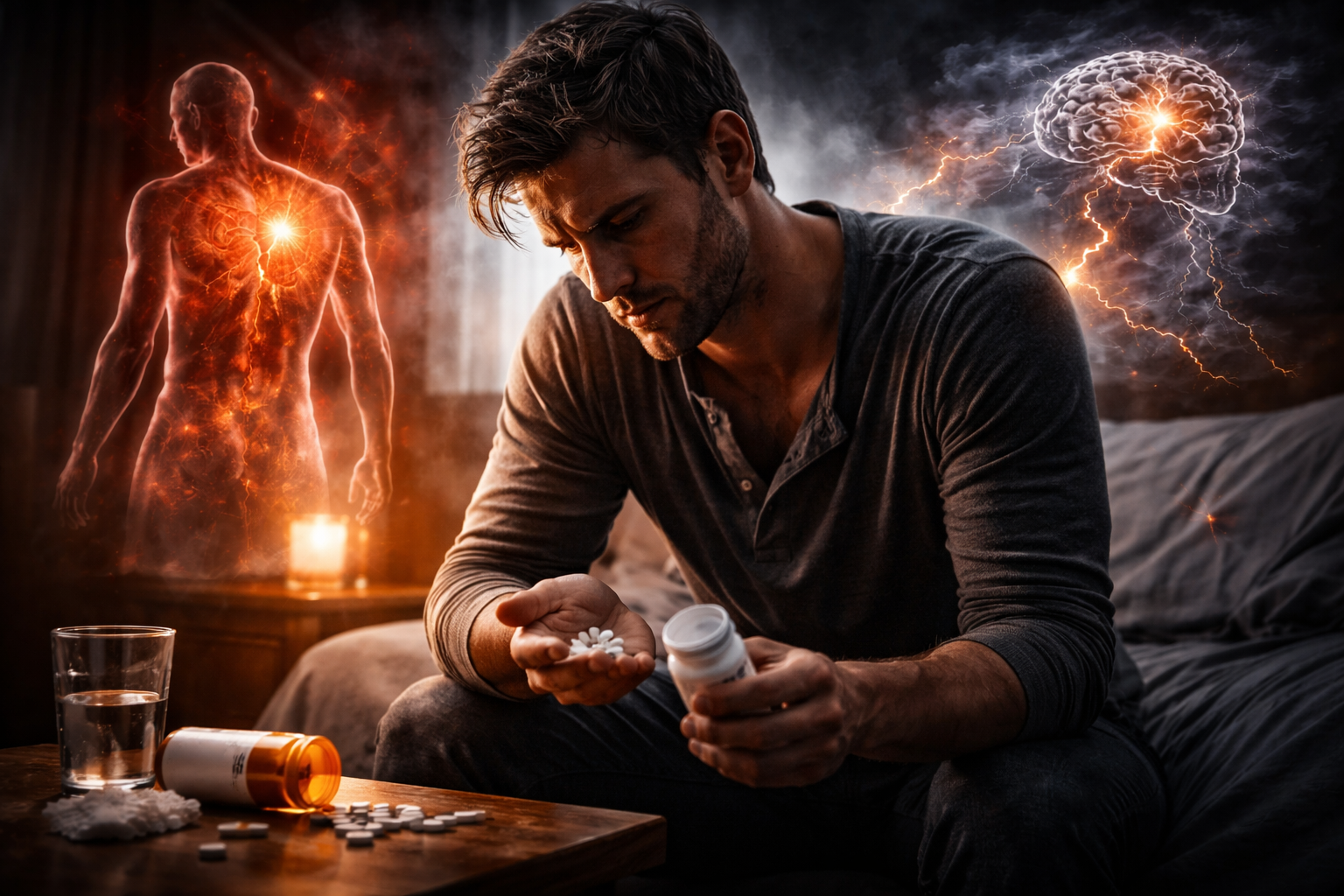
Cinematic image of a man holding opioid pills with visual representations of physical pain, emotional distress, and brain stress activity behind him, illustrating how opioids relieve multiple types of pain and increase addiction risk

🌪️ The Perfect Storm: When Predictors Stack

Here’s where things become extremely powerful.

Most people don’t just have one of these predictors.

They have multiple.

⚡ Example Stack:

  • Opioids give you energy
  • They wear off quickly
  • You have high tolerance
  • You’re dealing with chronic stress or pain

🚀 What Happens Next

  • Strong positive response
  • Short duration
  • Frequent use
  • Rapid tolerance
  • Increasing dependence

💡 Key Line

It’s not one factor… it’s the combination that creates the storm.

🔁 Why These Predictors Accelerate Addiction

Let’s simplify the cycle:

  1. Strong positive effect
  2. Effect fades quickly
  3. You repeat the behavior
  4. Tolerance increases
  5. The crash intensifies
  6. Cravings increase
  7. Repeat

🔥 The Core Principle

The better it works the faster it hooks you.
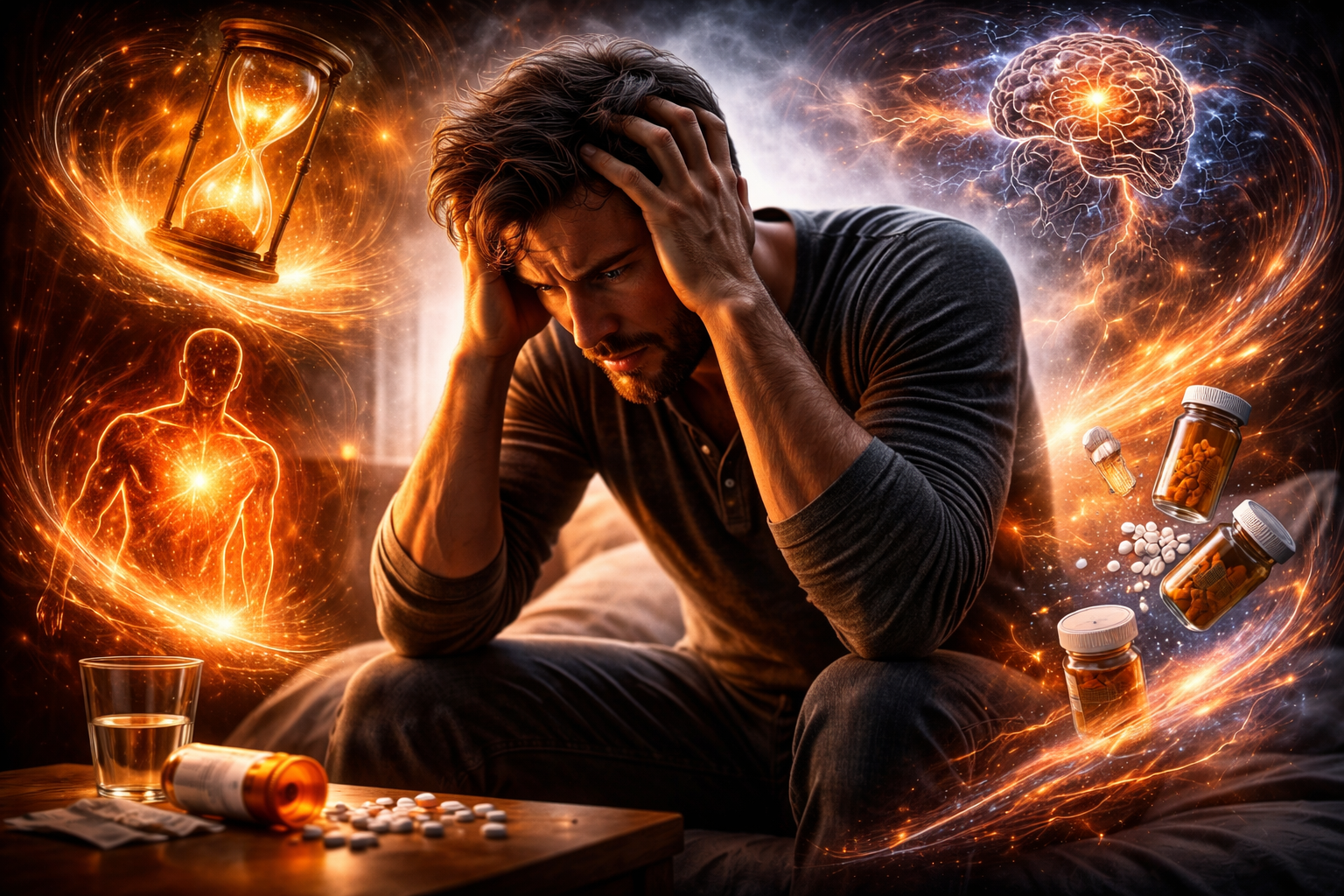
Cinematic image of a man overwhelmed by swirling symbols of addiction risk including brain activity, time pressure, physical pain, and pills, representing the combined effects of multiple opioid addiction predictors

🧠 Reframing Addiction: Remove Shame, Add Precision

This is where everything shifts.

Because when you understand these predictors…

Addiction stops looking like:

  • weakness
  • failure
  • lack of discipline

And starts looking like:

  • biological sensitivity
  • neurochemical reinforcement
  • adaptive patterning

💡 Power Reframe

You didn’t choose your response.
But you can learn how to work with it.

🛠️ What This Means for Recovery

This isn’t just theory.

This has real, practical implications.

🔄 Shift the Strategy

From:

  • “Just stop using”

To:

  • “Understand what the drug was doing—and replace it”

🧠 Key Recovery Targets

  • ⚡ Restore natural energy
  • 🧠 Rebuild neurotransmitters
  • 💔 Address emotional pain
  • 🌊 Regulate the nervous system
  • 🧩 Reduce overall stress load

🌱 Build Instead of Fight

The goal is not just to remove the substance.

It’s to:

👉 rebuild the system that needed it.

💡 Bridge Insight

The same biology that made you vulnerable…
can become your blueprint for recovery.

Cinematic image of a man receiving supportive connection with glowing symbols of brain healing and emotional regulation, representing reframing addiction from shame to biological understanding and recovery

💡 Final Takeaway

If opioids:

  • energized you
  • worked incredibly well
  • wore off too fast
  • felt like the solution to multiple problems

👉 That wasn’t random.

👉 That was your biology interacting with a powerful substance.

🧠 Closing Line

The goal isn’t to fight your wiring.
The goal is to understand it—
and build a life that works with it, not against it.

Written by:
Matt Finch
Published on:
March 18, 2026
Thoughts:
No comments yet

Categories: Opiate AddictionTags: addiction causes, addiction neuroscience, biochemical individuality, chronic pain addiction, emotional dysregulation addiction, fast opioid metabolism, hypomania opioids, mu opioid receptors, opioid addiction, opioid addiction predictors, opioid addiction risk factors, opioid dependence, opioid induced hypomania, opioid tolerance genetics, why opioids feel energizing

About Matt Finch

Matt teaches people how to get off opioids strategically and as comfortably as possible. He beat opioid addiction over 14 years ago then became a counselor at an Opioid Treatment Program. Present day Matt is an Opioid Recovery Coach, Author, Podcaster, and Speaker. Check out his Free Opioid Recovery Course to learn everything you need to quit opioids holistically. And you can call/text @
(619)-952-6011 for more information on coaching.

Reader Interactions

Leave a Reply Cancel reply

Your email address will not be published. Required fields are marked *

Primary Sidebar

🔎 Find What You’re Searching For…

→ For Opioid Recovery

Banner promoting a structured opioid detox course with the message “Quit opioids safely” and a call-to-action to start a step-by-step detox program.

→ For Addiction Recovery

strategic recovery banner ad for checking out Matt Finch's newest holistic recovery website.

→ For Physicians

Addiction medicine training for physicians — AMMP program helping doctors treat addiction with a structured system.

Most Recent

Physician analyzing addiction treatment complexity with a brain diagram showing a missing piece representing the lack of a structured system in addiction medicine

Why Most Physicians Are Forced to Guess When Treating Addiction (And What’s Missing)

Woman reflecting on recovery journey at sunset with blurred medication in foreground and family walking in distance, symbolizing freedom from codeine dependence.

How I Safely Tapered Off Codeine After 9 Years (Without Losing My Life or Career)

Illustration of a man experiencing opioid-induced euphoria with a glowing brain, floating pills, and DNA strands representing genetic and biochemical risk factors for opioid addiction

The 4 Hidden Predictors of Opioid Addiction (Most People Miss #1): Why Your Brain Might Be Wired to Get Hooked Faster

A symbolic cinematic image representing a calm, strategic, comfort-first path to quitting opioids safely and restoring balance to the nervous system.

How to Quit Opioids Safely, Comfort-First, and for Good — With a Strategic Plan That Actually Works

The Next Evolution of Opiate Addiction Support: Introducing Strategic Recovery™ with Matt Finch

Recommended Posts

Physician analyzing addiction treatment complexity with a brain diagram showing a missing piece representing the lack of a structured system in addiction medicine

Why Most Physicians Are Forced to Guess When Treating Addiction (And What’s Missing)

Woman reflecting on recovery journey at sunset with blurred medication in foreground and family walking in distance, symbolizing freedom from codeine dependence.

How I Safely Tapered Off Codeine After 9 Years (Without Losing My Life or Career)

A symbolic cinematic image representing a calm, strategic, comfort-first path to quitting opioids safely and restoring balance to the nervous system.

How to Quit Opioids Safely, Comfort-First, and for Good — With a Strategic Plan That Actually Works

Opiate Withdrawal Symptoms & Timeline | Here’s What To Expect…

gaba for opiate withdrawal

How To Use GABA For Opiate Withdrawal

cbd oil for opiate addiction

How To Use CBD Oil For Opiate Withdrawal, Pain Relief, Anxiety, and Much More…

is suboxone an opioid

Is Suboxone an Opioid? Know What Suboxone is BEFORE You Take it

opioid induced endocrinopathy

Opioid-Induced Endocrinopathy: How Opioids Can Screw Your Health

Success Stories

Woman reflecting on recovery journey at sunset with blurred medication in foreground and family walking in distance, symbolizing freedom from codeine dependence.

How I Safely Tapered Off Codeine After 9 Years (Without Losing My Life or Career)

addiction recovery and near death experience nde overdose

Woman Ends Opioid Addiction Of 20+ Years After An Overdose Near-Death Experience (NDE)

how garrett beat opioid addiction

How Garrett BEAT Opioids: A Story of Opioid Detox, PAWS, and Transformation

73-Year-Old Male Client Quits Buprenorphine With Ease!

One of the Most Inspirational Opiate Recovery Stories You Will Ever Read

using kratom to get off opiates

My Success Story Using Kratom To Get Off Opiates

story of how I recovered from opiate addiction

My First 6 Weeks Off Opiates – How I Got Through It

Explore more

Take the Free Course Listen to the Podcast Learn About Coaching

Footer

OPIOID ADDICTION SUPPORT

4012 Valeta St

San Diego, CA 92110

(619) 952-6011

Copyright © 2026 · Navigation Pro on Genesis Framework · WordPress · Log in

DISCLAIMER

The content on OpiateAddictionSupport.com is for informational use only and is not medical, legal, or any other type of advice. Please consult with a physician if you believe you may have a condition.

  • START HERE
  • FOR PHYSICIANS →
  • COURSE
  • GUIDES
  • PODCAST
  • SUPPLEMENTS
  • ABOUT
  • [ WORK WITH MATT ]