
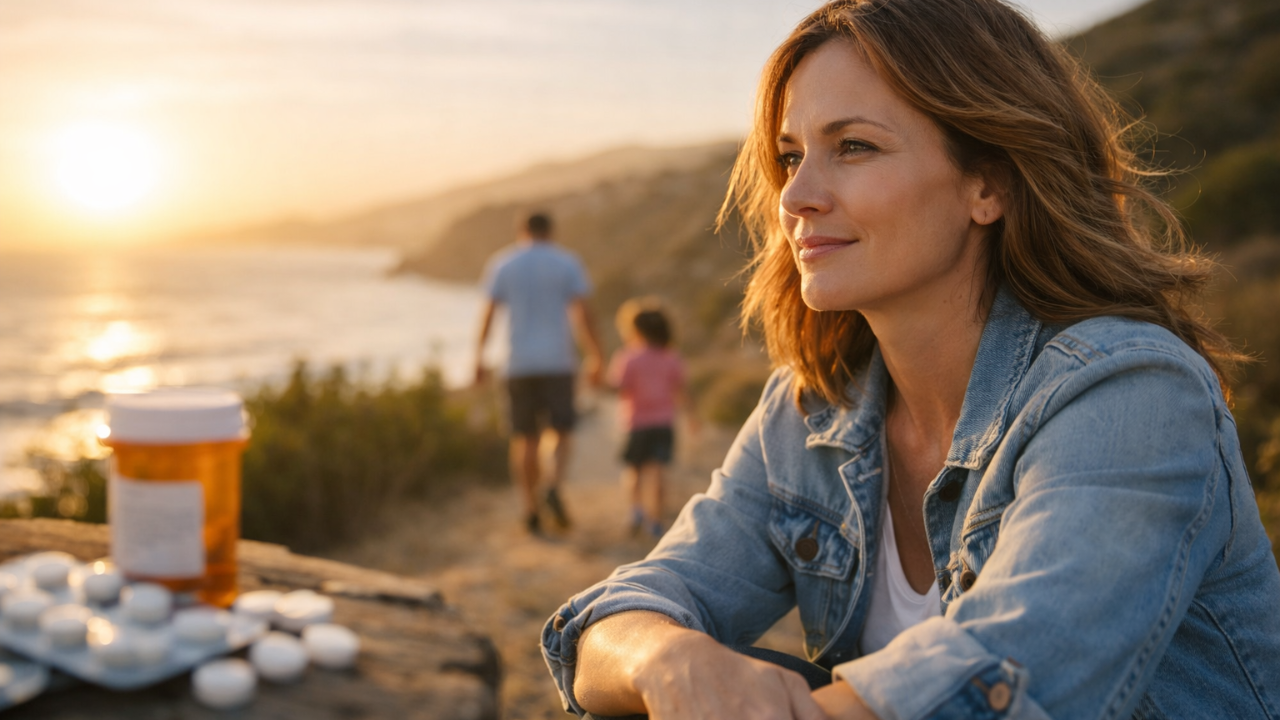
I was on opioid based treatment for chronic and acute pain issues that I had over many years and I’m now 42 years old.
At the start, this medication had helped.
However, over time my pain became chronic and soon became less and less effective as time went on, although I couldn’t recognise it at the time.
In May 2025 my dosage of codeine daily had reached 200mg + daily where it was no longer safe or sustainable for me to continue to use as a long-term pain management tool and it didn’t actually give me relief from pain anymore.
It just helped me feel “normal” and I was totally reliant on it to get through my day.
I have a senior level job that requires long days, full concentration and travel.
After almost 9 years of continual Codeine treatment I unsurprisingly developed a very strong physical dependency.
I knew this medication was no longer helping me and had in fact trapped me in a life around dosing schedules and continual worry about running out of tablets…
because of what I now understand to be inter-dose withdrawal…
where I was feeling dreadful more than I was feeling ok.
And at the start of this process I was very scared and unsure about the taper process and if I could do it without losing my job and being able to take care of my children, be a wife, etc.
I learned so much about both the withdrawal process and my own inner resilience along the way —
and I hope that sharing some of these insights will assist others who might feel overwhelmed, worried or just need some encouragement to start this life-changing process!
Here is what I did…
1. Set My Goal
Firstly I set myself a clear goal.
This was important to keep me motivated when times were very tough.
2. Researched What to Expect
I spent a few days doing research about what to expect from withdrawal.
The timeline, the symptoms, etc.
3. Compared the Detox Options
Understanding that there are many ways to stop the medication.
And the first big decision I had to make was:
Which one?
Some options I considered were:
a) Detox facility:
- very expensive $15k – $30k for a month and it would be a fairly rapid withdrawal where medication is dispensed for you in reducing dosages over 30 days with spa like facilities and accommodation
- there are usually no Drs, just health coaches
- this is typically for those with true addiction rather than dependence only
- the cost is huge
b) Substitution or additional medications to treat the withdrawal syndrome:
- I was prescribed Valium, gabapentin and clonidine treatments by a pain specialist to assist with the acute withdrawal symptoms, allowing for a faster taper over 1 – 3 months
- however, there was also a risk of dependence with these substitutes and therefore more tapering off these medications afterward.
c) Cold turkey with no support:
- most people don’t recommend this
- it leads to debilitating symptoms and risk of reinstating
d) A long slow and disciplined taper over almost a year:
- with a taper coach
- a range of supportive herbs, vitamins, amino acids and other natural remedies
- an at home remedial massage device and a range of other healthy lifestyle changes described below, in order to optimise my recovery and support my nervous system.
- this taper had me dropping the dose by no more than 10% per fortnight or month in a hyperbolic fashion (10% of previous dose, not starting dose)
4. Chose Option D (Self-Paced Taper)
The rest of my advice is purely on how I did the taper process and I can’t comment on results via the other options.
I’m so glad that I did the self-paced taper, because the longer hyperbolic schedule allowed me to continue my daily life, to be able to function somewhat normally whilst managing drops in dosage and preparing for them in advance.
I could plan my life events around my peak withdrawal symptoms.
Once I had developed my own customised taper plan with dates, dosages and notes about symptoms, I initially started with the slow one and then I moved to the moderate and then the faster taper as I got more confident and had better tools.
Each person should do their own individual taper plan to suit their situation.
5. Hired a Taper Coach – Matthew Finch
I also found a wonderful taper coach – Matthew Finch based in San Diego, California, USA.
I did about 3 – 4 zoom calls with Matt over my taper.
He sent me a huge amount of resources that were tailored to my situation and circumstances, not just generic advice.
He took the time to listen and understand my temperament, my goals, my other health issues and what would and wouldn’t work for me.
- His website is: Start Here – Opiate Addiction Support.
- He has courses, a podcast and lots of free blog articles.
- His Youtube channel is: www.youtube.com/@strategicrecoverywithmattfinch
- This is one of my favourite of his videos about supplements (not all are available in Australia), but Top Supplements For Anxiety, Opioid-Detox-Induced Anxiety, Sleep, Mood, and Confidence
- To get in touch with him the best way is to use this link to book a free 20min call with Matt: Select a Date & Time – Calendly
6. Used Lifestyle / Non-Supplement Tools
(VERY IMPORTANT):
- Taking a morning walk in the sunshine (no sunglasses)
- helps natural hormones and endorphins
- Spending time in nature where possible, gentle walking as much as possible
- not overdoing it – running is not ideal as it triggers cortisol.
- Heavy weights but few reps
- to regain physical strength
- and fight fatigue
- Nutrition
- low sugar
- high protein
- simple natural foods
- nuts and seeds
- eggs
- meat and fish
- healthy fats
- No alcohol, no caffeine (decaf only), no soft drinks
- nothing that is too stimulating for the nervous system whilst in withdrawal
- I bought this fantastic massage tool that I still use nightly to help tense muscles relax and it helped me overcome a panic attack during peak withdrawal
- vibration also helps the nervous system regulate.
- DrGraeme Ultimate Quad Head Massager | Dr Graeme Massagers
- Magnesium baths with lavender and hot showers
- as needed during peak days
- sometimes multiple times per day
- Planning to be at home and resting during days 3 – 5 after each reduction in dose
- helped me manage my symptoms and avoid stressful situations
- Box breathing technique
- laying on firm surface like the floor during peak insomnia
- meditation
- prayer
- journalling
- Learning all about the nervous system and finding natural ways to support relaxation
- Listening to calming music and frequencies including 528Hz
- Asked for help when I needed to recover
- having supportive family or friend is so important when you physically can’t do anything and are feeling very low
- I had to learn to be vulnerable instead of trying to do everything on my own and pushing through
- I had to learn to slow down and have compassion for myself
- having a cheer squad also really helps 😄
7. Used Targeted Supplements
The specific supplements that helped me the most were:
- Heantos-4 – ships worldwide, this was the best for the most severe withdrawals and I took up to 10 capsules x 3 times per day during peak or 5 x 3 times a day if withdrawal isn’t too severe.
- CalmSupport (available on Amazon) – a great combo of herbs and vitamins. I was taking 2 per day up to 8 per day before and after the peak, but it can also be enough.
- Ü Relax– a powdered drink that is naturally soothing for sleep issues. There are lots of other naturally calming drinks and healthy soda’s available online.
- Full spectrum Passionflower for sleep (1 to 2 per night)
- High dose Vitamin C (Liposomal)
- Magnesium (several different types)
- Electrolytes (I took electrolytes daily) – these ones were great. https://iherb.co/qfuUFJgH
8. Attained Freedom and a Healthy Life (Goal Achieved!)
These are the tools that worked for me to get me safely through the most difficult and scary experiences, but also one of the most rewarding things I’ve ever done!!
Freedom and a healthy life are the result when you reach the end.
I know this to be true and its so worth it.
I hope over time there will be less stigma around these medications and more support options available for patients like me that want to do the right thing (even though its the hard thing) for their health and overall wellbeing.
The joy I feel having overcome this challenge is indescribable and I’m rebuilding my life with healthier, happier habits that I acquired during this process!
Kindest regards,
Tamara

Leave a Reply