













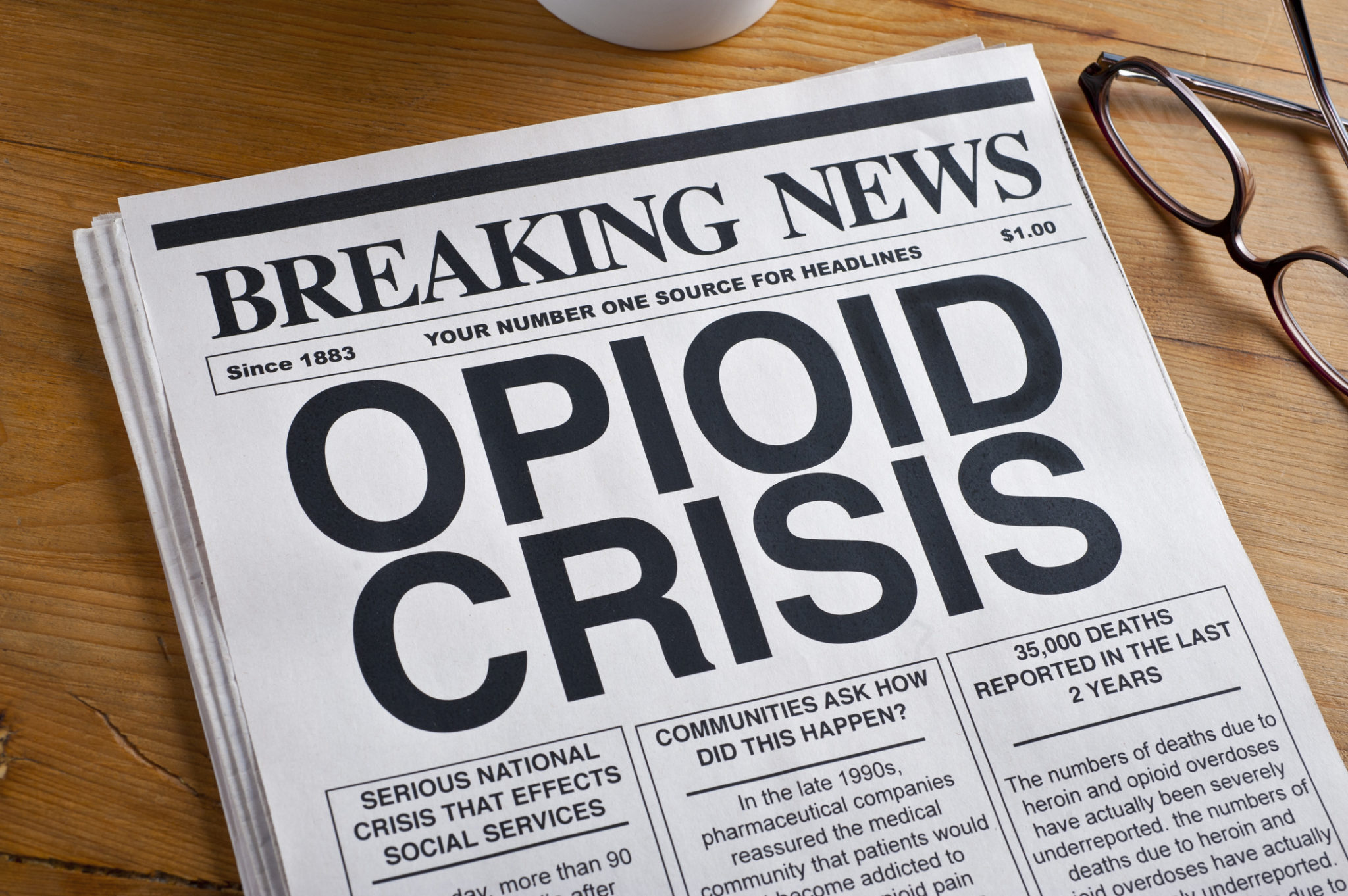
Up until the early 1990’s, the U.S. consumed almost no opioids whatsoever, then quickly got to a point where we used 83% of the world’s oxycodone and almost 98% of the world’s hydrocodone.
In my favorite documentary on the opioid epidemic, called Chasing Heroin, Barry Meier, author of Pain Killer, comments on the general view relating to pain relief and its treatment with opioids prior to the 1990’s.
“In this country, there was a long-running puritanical attitude towards pain, and it resulted in almost a barbaric undertreatment of pain, particularly when it came to people with cancer and in the terminal stages of cancer.”
For a long time, doctors had avoided treating pain with opioids due to fear of addicting their patients.
That all changed with the new developments in the hospice movement.
In Chasing Heroin, Scott Burris, Director of the Temple University Center for Health Law, identifies the catalyst that started the boom in prescription opioid sales.
“That movement collides with an opportunistic drug company in the form of Purdue Pharma. They see the opportunity to expand the use of these drugs beyond the cancer wards come into the mainstream of medicine, and the drug that becomes the vehicle through which they do that is a drug called OxyContin.”
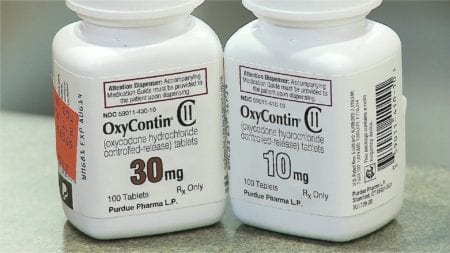
In another clip of Sam Quinones, he states “There is no question that the marketing of OxyContin was the most aggressive marketing of a narcotic drug ever undertaken by a pharmaceutical producer. The FDA allowed them to make the claim that because it was a long-acting drug, it might, the stress being on the word might be less prone to addiction and abuse than traditional drugs. There was absolutely no science to support this idea. Zero.”
The Deception
After getting FDA approval, now it was time to trick the doctors into believing OxyContin wasn’t addictive. Purdue Pharma launched a series of promotional videos in an effort to encourage doctors to treat pain with opioids.
Here’s what happens on a few of these promo videos, which were shown in Chasing Heroin:
- A prominent pain specialist assuredly claims “the likelihood that the treatment of pain using an opioid drug which is prescribed by a doctor will lead to addiction is extremely low.”
- While another doctor is talking, large text appears on the video that reads “less than 1% of patients become addicted.”
- Voices of a male and female narrator on the video convincingly state “opioids are safe and effective medicines for treating chronic pain,” and “the undertreatment of pain is a major public health problem.”
I find it ironic and sad that a marketing campaign focused on convincing doctors that the undertreatment of pain was a major public health problem, in fact, led to a real public health epidemic of deadly consequence.
By 2001, Purdue Pharma was selling more than a billion dollars worth of OxyContin a year. That also set the stage for more prescriptions being written for drugs like Percocet and Vicodin, and consequently, sales of these increased significantly.
Pill abuse and addiction reached an all-time high, and newscasters were referring to it as “Pharmageddon.”
Luckily, Purdue Pharma didn’t get away with their deception.
The Bust
In 2007, after a four-year investigation by Federal prosecutors, Purdue admitted to charges of fraudulent marketing.
They were ordered to pay $600 million in fines and settlements, but the damage was already done, and the epidemic wasn’t slowing down.
Federal officials said that internal Purdue Pharma documents showed that company officers recognized that, even before the drug was marketed, they would face stiff resistance from doctors concerned about the potential of a narcotic like OxyContin to be abused by patients.
As a result, prosecutors charged, the company effectively started a fraudulent and deceptive marketing campaign aimed at convincing doctors that OxyContin, because of its time-release formula, was less prone to abuse and that it was less likely to cause addiction or to produce other narcotic side effects than competing drugs.
In its plea agreement, the company acknowledged doing so.
According to prosecutors, some Purdue Pharma supervisors and employees used fraudulent techniques to promote OxyContin to doctors.
For instance, when the painkiller was first approved, F.D.A. officials allowed Purdue Pharma to state the time-released nature of a narcotic like OxyContin “is believed to reduce” its potential to be abused.
But some Purdue sales representatives falsely told doctors that the statement meant that OxyContin was less likely to lead to addiction or abuse than traditional, fast-acting painkillers like Percocet.
In addition, some company sales officials gave doctors misleading scientific charts to support such fraudulent claims.

Also, Purdue Pharma trained its sales representatives on how to overcome concerns by doctors that OxyContin could be easily abused, according to the transcript of a training tape made for Purdue Pharma sales official.
Purdue Pharma also knew, prosecutors charged, that large quantities of oxycodone could be easily extracted from OxyContin so the drug could be intravenously injected by drug addicts.
I was intrigued and upset when I learned how this opioid epidemic started. To put it simply, brothers and co-owners of Purdue Pharma Raymond and Mortimer Sackler decided that riches were more important than morality, and hundreds of thousands of individuals have paid the price as a result.
In the article Kingpins: OxyContin, Heroin, and the Sackler-Sinaloa Connection, Jason Smith writes:
“An opiate epidemic was released onto the American public, and we’ve been confused about who to blame from the outset. In Broward County, Florida, an addict possessing OxyContin without a prescription received a mandatory three-year sentence. In Virginia, three men pleaded guilty to starting the opioid epidemic, and not a single one spent a minute in jail.”

Mexican Entrepreneurs
Unfortunately, things have gotten even worse over the past several years. Painkiller addiction paved the way for Mexican drug suppliers.
They would soon add to the opioid epidemic by flooding inexpensive and potent heroin into towns and suburbs across the nation.
In Chasing Heroin, Sam Quinones states “They were the first market to understand that the pill market was essentially priming the heroin market. Anywhere there was a town that had a lot of pill users they would set up a store.”
This is where things started to get even more out of control. Prescription opioids were often expensive and low in supply.
Thus, many addicts end up turning to heroin.
Chinese Entrepreneurs
But nowadays heroin is the least of our problems. The Chinese entrepreneurs have been flooding the states with fentanyl, which is 100 times stronger than morphine.
Fentanyl, in particular, has seen a 540 percent rise in overdose deaths within the past few years.
The overdose death rate is skyrocketing because opioid addicts think they’re buying heroin or perhaps OxyContin, but really they’re getting fentanyl that was smuggled here from China, where there are factories that produce it.
Fentanyl is really cheap to make, so high profits for the drug dealers but extremely high risk to the poor soul that shoots it up in their vein thinking its heroin.
Final Thoughts
For a very long this was a “Silent Epidemic,” because until about two years ago, it had not received the type of widespread news reporting awareness that we now have.
But despite this national attention and the government’s action plan to combat the epidemic, the addiction and overdose rates continue to rise.

Leave a Reply